Sunday, June 25, 2006

Hornbill sighting of the unnatural kind

The picture does say it all doesn't it? U can hardly argue with domestication of dogs, cats, chickens as pets. For dogs, u have to walk them to keep them happy with activity. But I can hardly imagine any sort of activity (mental/physical) that will keep these two happy to be caged up. For me the joy of observing any animal is watch its behaviour in relation to its environment i.e. bird behaviour described in the BES blog, heck even a cat stalking a house gecko is visually more entertaining than a caged hornbill with no stimulation.
The keeping of rare/exotic pets/plants is certainly a problem that can't be solved overnight. Especially when there is no overwhelming impetus for the local authorities to stem the problem. I have heard stories even of biologists guilty of such things. Things like these makes you reflect on the human condition and suddenly you are not amazed at why the world is in a mess.

here's the rest of the original post from Joseph Lai.
"I cannot begin to describe how heavy my heart felt recently when I found two huge Blyth's Hornbills being crammed into a tiny cage and put on sale at Chua's Pet Trading in Hougang. If there is any proverbial cupboard where skeletons are to be found in 'First World' Singapore, Hougang is one. It's the 'Guantanamo Bay' of Singapore... and freedom is taken away for no other crime than being 'wild and exotic' birds.

What else can I say?
: (

Beyond what I have just wrote, how do I begin to describe the intimacy with which our own freedom are tied to theirs? I am truly lost for words.

However, let me share this photo (right), and invite you to step back in time with me and witness how insistent the hornbills were at biting the cold hard wire
of the cage. They just want to be free; as free as all wild birds are born to be.

Would you, my dear sentient friends, share your thoughts and feelings with me too? I look forward to post them faithfully here. Thank you.
WHEN THE BUYING STOPS, THE TRADING WILL TOO."

Saturday, June 24, 2006

Banded Woodpecker @Fort Canning Park by Denosha


link to clubsnap post

haven't got much luck with woodpeckers myself. I wonder where these ppl keep finding them! ;p
Thanks to Denosha for graciously letting me post the pic here. Do visit http://denosha.shutterchance.com for more shots!

1st record of Buffy Fish Owl Ketupa ketupu @Sentosa by Yury


link

With regards to the earlier id which was wrong this is actually the rare Buffy Fish Owl Ketupa ketupu. Great Catch Yury! And according to Subaraj, this is a first species record for that island!

Sunday, June 18, 2006

Paradise Tree Snake Chrysopelea paradisi @ Sungei Buloh by

link
Wow its just lying on the boardwalk! Lucky chap.. of course he could be luckier and actually spot it 'flying' ... (Yups this snake is able to flatten its body and glide through the air!)
"The Paradise Tree Snake is considered by some to be rare, however in Singapore it is commonly encountered in a variety of habitats including mangrove, secondary forest, and parks and gardens. "

p.s. read on the thread about another blog on Singapore Snakes

References
Snakes of Southeast Asia : Paradise Tree Snake - Chrysopelea paradisi
http://www.ecologyasia.com/verts/snakes/paradise_tree-snake.htm

Flying Snake Home Page by Jake Socha, University of Chicago: frequently asked questions on the species, quick-time video clips of their flight, photos, maps of their distribution, taxonomic details

Woodpeckers Common Flameback Dinopium javanense) @ Pasir Ris Park, Holland by Nur Bin Muhammad and hiker

A thread in clubsnap with quite a few woodpecker shots
There's one pic of a woodpecker pecking at its reflection in a mirror. Here's a funny report on the damage that it can do (non-ecologically speaking).It's  probably trying to fend off rivals, but I didn't expect females to do it as well. Doing a search on the topic made me realise I was wrong,

Bagworm renovating its bag, photos & write up by Adrian Wee

This is a mystery solved for me. For ages I have wondered what creature hides within this clump of twigs, being the morally inclined naturalist, i was reluctant to pry the home open to appease my curiosity.  But now I know!

here's a passage from the excellent writeup
"Bagworms are a group of highly specialized lepidopterans belonging to the family Psychidae and exhibit extreme development of sexual dimorphism. Males are winged whereas females lack functional appendages. Larvae of both males and females, soon after hatching from the eggs climb up to the top of their host plants in order to have an access to the soft and palatable tips of the growing shoots. They construct a small but tough bag of silk of either cylindrical or conical shape and glue small fragments of plant tissues around their cases. Larvae always keep their body inside the cases. While moving about, their head and thorax are protruded out so that they move forward on their thoracic legs dragging the case behind them, which is gripped by hooks on the abdominal prolegs. When taking rest, the rims of the cases remain attached to a twig by means of silken thread so that the cases hang vertically with both their openings remaining closed."

Savanna Nightjar Caprimulgus affinis by Foo Sai Khoon

Excellent writeup with great pics to boot! No mention of locality where he spotted this one but he does mention where u can see them

here's a preview of his writeup
"Nightjars are birds of legend. In the 17th century Britain, nightjars are thought to be "goatsucker" as people really believed that nightjars visited goats at night and drank their milk! Incidentally, Caprimulgus is a latin word for goatsucker. So you can imagine there are calls for action and cries for the creature blood. But none of the frightened crowd volunteers to venture out into the night ……
In south-eastern parts of USA, it was once thought that the number of times a Whip-poor-will (related to nightjar) sang in succession indicated the number of years it would be before a man married.
In Sulawesi, the Satanic or Diabolical Nightjar (Eurostopodus diabolicus) was named because of the belief that the call it made by night was the sound of it pulling out people eyes!"

p.s. sorry for the long break in posting i shall endeavour to post more frequently!

Sunday, June 04, 2006

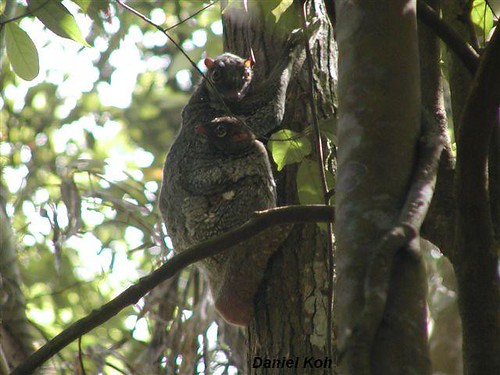
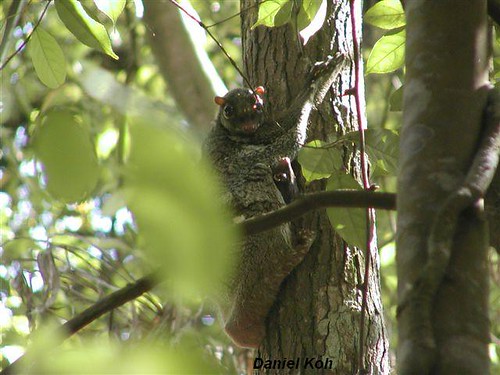
Defensive Colugo mother spotted by Daniel Koh


link

A mother colugo and her baby shot by hiker from clubsnap. If you are wondering why a colugo needs to fear Homo sapiens you can read it here. The joy of a chance meeting in the reserves with a wild animal is indescribable. To be able to take pictures of them and show others takes the enjoyment of nature up a notch. The mildest word i can think of to use on poachers that choose to take away all these from us is SELFISH. The stronger words I shall reserve.

Thanks to Daniel for graciously providing me with the images!

Saturday, May 20, 2006

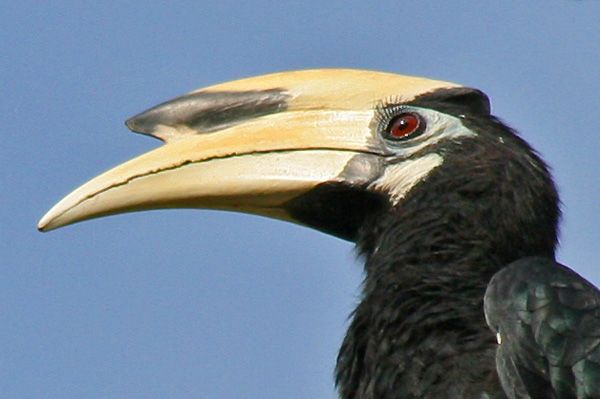
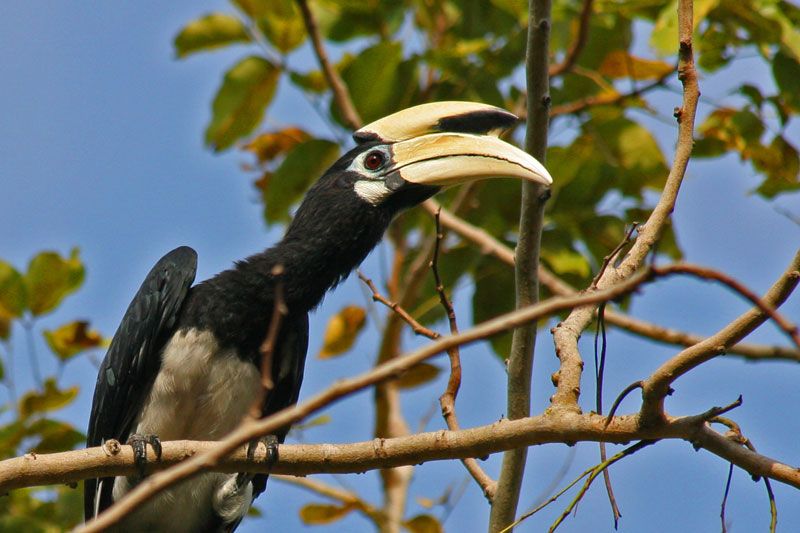
Oriental Pied Hornbills Anthracoceros albirostris@ Changi by wong1979


Thanks to Wong1979 from clubsnap for graciously allowing me to reproduce his excellent pictures of the Oriental Pied Hornbills [ Anthracoceros albirostris ] here on this blog. Thanks to Sharkspin for id of the birds. I would like to take this opportunity to highlight the

Hornbill Project Singapore you CAN make a difference. Read all about
our own hornbills and how you can help with your sightings on the
bird ecology blog http://besgroup.blogspot.com

Be Watchful for poachers though when admiring these birds. It would be sad if they were caught by poachers (like the colugo incident) or the nests were disturbed.

Links:

Oriental pied hornbill on the Forest Department, Sarawak website: brief fact sheet

Fact sheet with photos on flora and fauna of Chek Jawa, Pulau Ubin

Picture of a Male from the Oriental Bird Club.

Wonder about the name
in Chinese, Japanese and vietnamese?

Monday, May 08, 2006

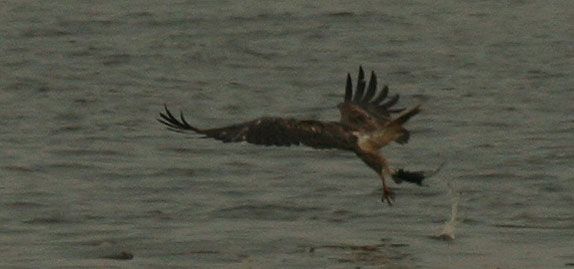
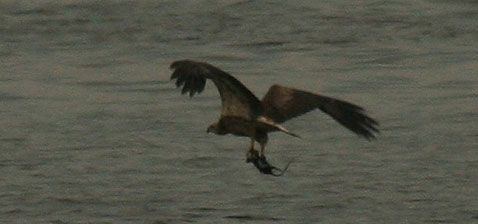
Rat catching White-bellied Fish-Eagles? @ changi boardwalk by wong1979

LOL I stared at the screen for 5 mins to think of a title for this post. Firstly I didn't know that rats can swim out to sea until the owner of these pics did a bit of research(see original thread). Can anyone id the eagle and also comment on this behaviour? text in italics belong to the pic owner

UPDATE: Thanks to Dr Wee and Mr Subaraj, the identity mystery is somewhat solved. They should be juvenile White-bellied Fish-Eagles Haliaeetus leucogaster

here's rest of Subaraj's reply
Though somewhat dark, they appear to be juvenile White-bellied Fish-Eagles Haliaeetus leucogaster. Fish Eagles are known to take anything swimming in open water. Besides fish, they are also known to take sea snakes and turtles. A rat swimming should be no exception. This rat could have been swimming across somewhere or may have come off a boat.

I saw some eagles hovering above the sea and thought they must be fishing for fish until on closer inspection ...huh? Fish got tail meh?


I thought it could be some kind of monitor lizard or sea creature with a tail, but from the vague shape I can make out of, it looks like a rat. So I went googling and found out that indeed, a rat can swim half a mile out into the sea.

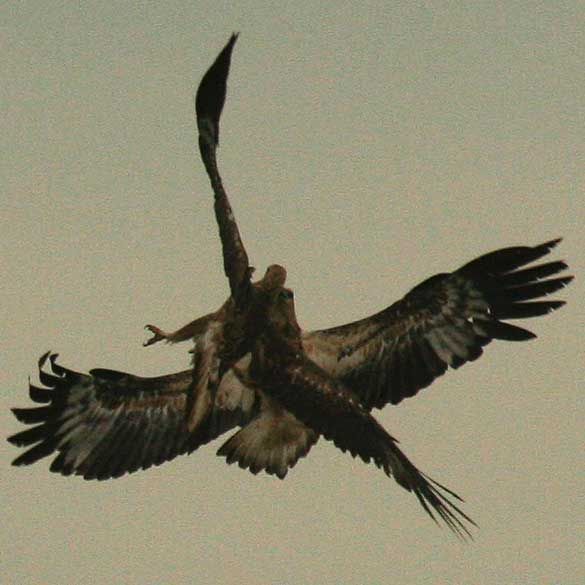
After which, I saw another eagle sparring with it, as if to snatch the food:
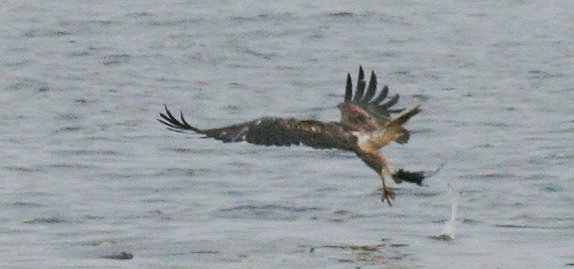
hmm the pic looks brighter with another computer but its too dark to see anything on this one.. uploading new edited for brightness


Friday, April 28, 2006

Collared Kingfisher on No fishing sign by Roger

http://forums.clubsnap.org/showthread.php?t=191188

Check out this humorous pic by roger! Although amusing, i think it does
drive home another more subtle message. The message or rather the reason
for not fishing illegally at nature reserves. While you are there
fishing for some weekend fun, these creatures are just feeding their
mouths and that of their offspring (and they do not have weekends mind
you). Depriving them of a food source is really make their already hard
lives (due to habitat loss) harder. In fact the first time i held a
collared kingfisher was during my class when we set up mist nets to
catch birds in Kent Ridge as a demostration. It might not be obvious but
at that time I was like "WHAT?? KINGFISHER?? IN SECONDARY FOREST? KENT
RIDGE? GOT FISH MEH???" hahah well, apparently some of them have taken
to alternate feeding habits and not feeding on fish solely. I wonder if
this will lead to further speciation but that's another topic... its
truly sad that a kingfisher has no fish to feed on.

Sunday, April 23, 2006

Flying Lemur/Colugo @ Bukit Timah Nature Reserve by vbs1979

link

Abit wary of posting colugo sightings after the poacher incident
But there's no denying that these creatures are in the central nature reserve. We can't fight for the conservation of forest plots if there are no species(plants and animals pls) there worth preserving but letting others know of the presence will tempt poachers (of plants and animals too!) to go in there and take what is meant to be shared. Undeniably, humans are the biggest impact on wildlife proof is here. Still no news of the poachers, and I doubt they will be caught but I hope that people out there will keep a lookout for poachers while noting the fauna as well. On a brighter note check out an 'ah beng' version of the colugo lol wonder where it gets its fur dyed.

1.5m Spitting Cobra(?) Naja sumatrana @ Kent Ridge Park by Curare

link

ID unsure and kindly done by cerebrus. Any input please post in the comments.

on a personal note: DARN IT! How come I never see them before?? haha but if it is a spitting cobra I guess I won't want to go too near to them as well.


Orange-bellied flowerpeckerDicaeum trigonostigma by Jeff


Images copyright of Jeff from CS
link to CS post.


There is a beautiful picture of the bird on a bottlebrush tree (Callistemon rigidus). Can't find alot of info on the bird but there's a site that describes it as residing in 'upper canopy' and ' primary and disturbed forests, open wooded areas, beach vegetation and stunted kerangas forests'. Strange huh? Wouldn't think it will be found on low enough ground to be shot then. but here it is on what I am guess is a Melastoma malabathricum so i guess it justs goes where there's food and not limited to high canopies. Want to see more of this bird? I guess you can plant more Straits Rhododendron shrubs and bottlebrush trees then. Oh another thing apparently members of the Nectariniidae are not found in Japan!

Birds of Sarawak
http://www.geocities.com/RainForest/Vines/6980/dicaeum.html
Mangoverde World Bird Guide Species Page: Orange-bellied Flowerpecker
http://www.mangoverde.com/wbg/spec/spec169-22.html
straits rhododendron (melastoma malabathricum): info fact sheet
http://www.naturia.per.sg/buloh/plants/melastoma.htm
Nectariniidae
http://www.cjvlang.com/Birds/sunbird.html

Sunday, April 09, 2006

More spiders by tchuanye @ Henry Park (showing food web!)

http://forums.clubsnap.org/showthread.php?t=187642
Amazing series of shots documenting the demise of 2 spiders....

excerpted "I was at Henry park again today, and I saw a really amazing site! Really the law of nature at work.

First, the Lynx was already feeding on this spider...not sure how long....when I notice this little heavy jumper sneaking over, peeking at them. At first, I thought...nah...so small its not going to eat the lynx.

Later, it started to approach closer, than stalk it....than "POUNCE!" in a blink of an eye, it grabbed the lynx at the middle and ended up suspended with its safety line. The lynx meal was thrown aside of course. The jumper stayed at that position for quite sometime, I guess to let the venom sink in. Later it started to drag it along to somewhere.

Wow, I have seen spider eating spider before, but not 3 in a row....so seems like Heavy Jumer>Lynx>some unknown spider... thats the law of nature at work!

I am posting the sequence as I saw it, and both taken with FZ10+6T+Sigma CU and A610+reverse lens, + my Achiever 828 with taped on Stofen.
All at F8, ISO 50 various speeds"

Friday, April 07, 2006

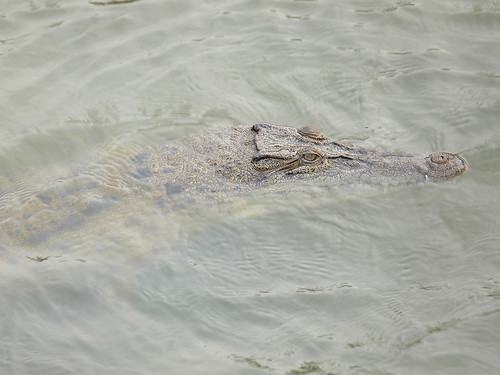
Estuarine Crocodile 2.1m Crocodylus porosus@ Sungei Buloh posted by Freddie Young


Wild Crocodile at Sungei Buloh

Dear All,
This is another wild crocodiles spotted at Sungei Buloh Wetland in March 2006. The location of the sighting is below the bridge and it is about 2.1 m long. I understand from the park ranger that this beautiful creature is often found roaming underneath the bridge during low tide.
Thank you,
Freddie Young

Thursday, April 06, 2006

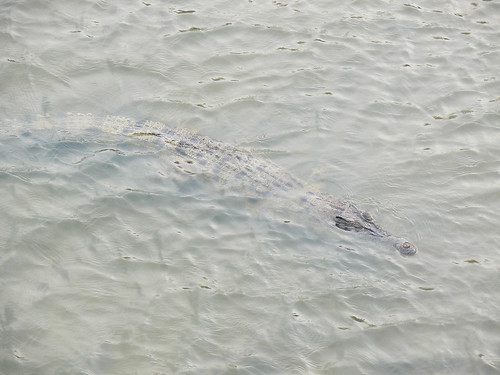
Estuarine Crocodile Crocodylus porosus@ Sungei Buloh posted by Freddie Young

Dear All,
I have taken this photo at Sungei Buloh Wetland on 1 April 2006 at 3.00pm near to the waterhole no. 1.12. The location is after the bridge and turn left for approximately 20m. I have saw this crocodile twice on separate dates and according to the staff, it is very frequently seen roaming there. The crocodile is about 1.6m long and should be quite young. Currently I am going island wide to look for wild crocodiles. Pls let me know and share the photos with me if you happen to know where I can found one.
Regards,
Freddie Young

kevin: Wow, you spotted the croc! I believe the species name is Crocodylus porosus Perhaps its the same one here.

There's more info on this species at the ecology asia site.
http://www.ecologyasia.com/verts/lizards/estuarine_crocodile.htm

Saturday, March 25, 2006

Buffy Fish Owl (highly rare!) by Abdul

http://forums.clubsnap.org/showthread.php?t=185547

".... This is the the Fourth sighting of this Buffy Fish Owl which is believed to be extinct on the main island based on Threatened Animals of Singapore-1995....." - Abdul

Darn I wish I could see it in real life too.

Tuesday, March 21, 2006

Black-eyed Litter Frog Leptobrachium nigrops @ Lower Peirce by Kevin

Black-eyed Litter Frog Leptobrachium nigrops spotted at Lower Peirce Reservoir. Spotted by Chengpuay actually but too bad he dun have camera that day so I am posting this pic. This nocturnal frog has large jet black eyes, I guess to hunt in the dark. I don't know about average frog leg length but apparently this guy has rather short legs and can't hop around very well. Funny right? There's more "When disturbed it will assume a low crouch rather than attempt to flee." Hmmm I wonder if its because of the short legs.

"The species breeds in shallow forest streams and the tadpoles are large and black. The Black-eyed Litter Frog ranges from Peninsular Malaysia to Singapore and possibly Sarawak, Borneo. Size (snout to vent) : Female 5 cm, Male 4.5 cm"


References

Wild Singapore site
http://www.wildsingapore.per.sg/discovery/factsheet/frogblkeyed.htm

Amphibians of Southeast Asia : Black-eyed Litter Frog - Leptobrachium
nigrops
http://www.ecologyasia.com/verts/amphibians/black-eyed_litter_frog.htm

Colugo attacked by poachers! (reproduced from wildsingapore)

This time this is a sighting of an ugly side of human nature instead
of nature--poachers. I hope everyone can play a part in protecting
what precious little we have....
Kevin

Colugo attacked by poachers!
Photos and details on Aaron's post on the Nature Photographic Society forum
http://www.naturephotosociety.org.sg/dcforum/DCForumID2/574.html#1

Poachers shot down a mother colugo (flying lemur) and her
baby on Sunday. A group of civic-minded people alerted NParks who took charge of
the situation.

More about colugos...
Norman Lim who studied them
http://www.wildsingapore.com/riablog/people/norman.htm

Fact sheet and photos of colugos on Kwok Wai's WildLife Singapore
website http://www.wildsingapore.per.sg/discovery/factsheet/colugo.htm

"Flying Lemur thriving in Singapore's Nature Reserves"
http://www.molluscan.com/forum/cgi-bin/dcforum/dcboard.cgi?az=printer_format&om=153&forum=DCForumID14

The nature reserve is supporting a 3,000-strong colony of flying
lemurs, which were previously thought to be near extinction in
Singapore.

Associate Professor Peter Ng, director of the Raffles Museum of
Biodiversity Research: 'This animal is secretive and rarely seen. A
study like this shows that an endangered animal like the flying
lemur is doing better than we thought.'

However, other less-adaptable species could be in trouble.

Earlier this year, a landmark study by the National University of
Singapore and Australia's Northern Territory University found that
Singapore has lost about half its animal species in the last 200
years.

Based on detailed documentation of the state of mammals, birds, fish
and butterflies on the island, it found that at least 881 of 3,196
recorded species, or 28 per cent - had vanished forever.

Taking into account the probable number of animals here before
detailed records were made in the late 1800s, it predicted this
figure was actually higher - about half Singapore's animals.

And more than half of those remaining live in the nature reserves.

Considering how many species have gone extinct, Prof Ng said it was
a very pleasant surprise to find the flying lemurs thriving.

'It shows that even though we have small forests, they do contain
some jewels.'

You CAN make a difference!
--------------------------
Be alert to people who are out to hurt our native wildlife.

If you come across suspicious people in the forest, please call
NParks at 64685736.